The Five Indicators of Crisis II

Our new book, Crisis Engineering, is about what actually happens when systems break under pressure, and how to fix them.
It comes out April 7, 2026 everywhere books are sold as a paperback, and audiobook (read by Cassandra Campbell).
For bulk orders below 500 copies, purchase at Porchlight. For bulk orders over 500 copies, please contact marina@layeraleph.com.
This post is the second of a three-part series on the signals and shock of crisis, alongside the opportunities for response and renewal they unlock. Read part one here.
Part three of this series covers other useful indicators of crisis, and how to use them.
Disruption of Core Processes & Outcomes
This indicator of a useful crisis is often (though not always) clear and uncontroversial: some existential purpose of a complex system stops working, fails to produce outcomes fast enough to match demand, or has its timeline increase by an order of magnitude or more.
Examples are legion, and easy to explain:
-
Ticketmaster fails to scale to Swiftie-induced demand[1].
-
Unemployment insurance program payment timelines grow exponentially as claim backlogs build during a pandemic[2].
-
System failures ground all of an air carrier's flights[3].
-
An automotive titan must switch to building tanks[4].
-
Maersk reroutes Middle Eastern shipping lines to run around the Cape of Good Hope[5].
How to use it
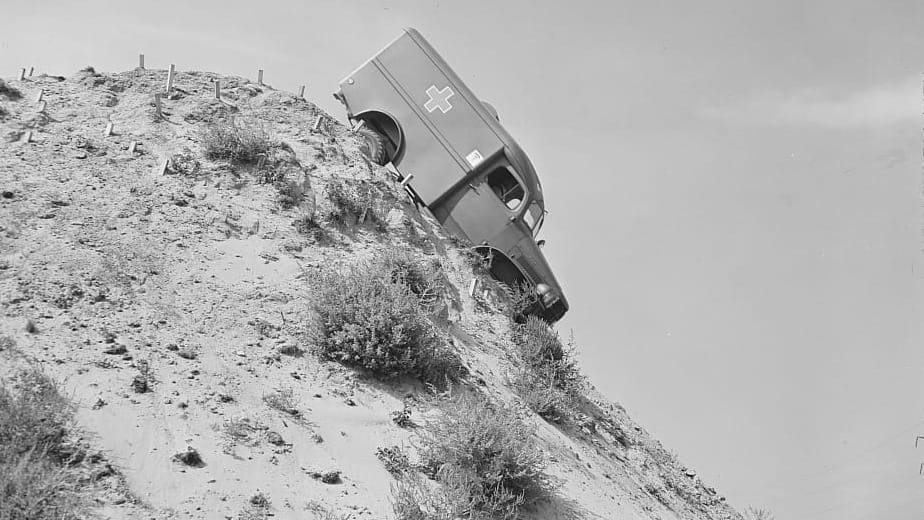
Core disruption directly affects decision-making and how an operator might take action. The consequences of decisions can now go far outside the usual range; the expected value[6] of actions drifts a standard deviation, or two, or three, away from the mean.
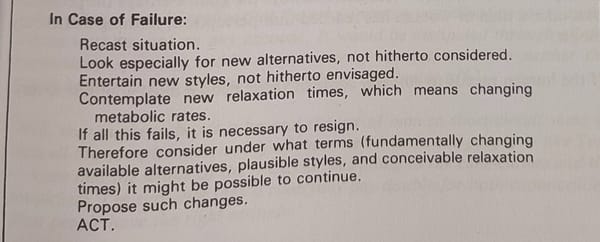
Broken core functions also mean that meaningful change is no longer optional. An organization and its complex system must transform to proceed through the crisis.
Suddenly, not only do actions have the potential to make or break the day, and all manner of actions previously inconceivable to an organization are available.
We'll tell you how to increase the chances of taking successful actions when we explain how to stand up a crisis engineering center.
Next time, the last two indicators of a useful crisis: high visibility, and rigid timelines.
https://en.wikipedia.org/wiki/Taylor_Swift–Ticketmaster_controversy ↩︎
We saw this one firsthand: https://www.latimes.com/california/story/2020-09-19/california-unemployment-agency-edd-problems-report-newsom ↩︎
Here's a recent one, they happen often: https://apnews.com/article/faa-ground-stop-jetblue-e990b118812f467d904d92375b984d71 ↩︎
https://www.military.com/veteran-jobs/career-advice/military-transition/how-an-auto-giant-got-ready-for-war.html ↩︎
This happened last week. https://www.maersk.com/news/articles/2026/03/01/me11-mecl-rerouting-cape-of-good-hope-march ↩︎